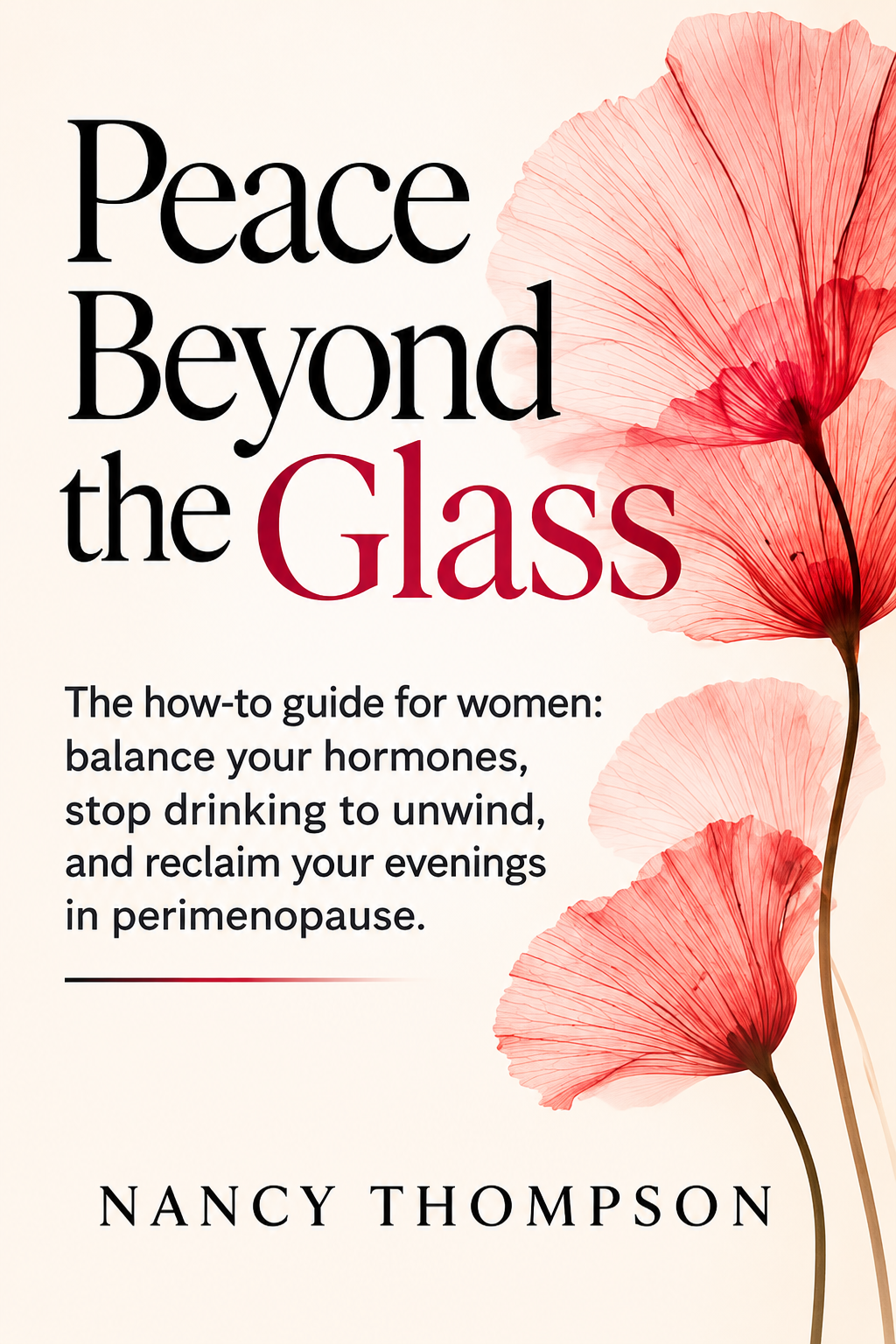
Peace Beyond the Glass
For women who wind down with wine

The Strange Reason So Many Hardworking Women Reach for Wine at Six O’Clock, and It Has Nothing to Do With Willpower

You haven’t decided anything yet. Your body has. After twelve hours on duty, it needs a physical signal that it can finally stop, and for years wine has been the only thing doing that job. Peace Beyond the Glass shows you how to give your body that signal without the glass, so your evenings feel calm instead of a nightly battle.

Yes! Rush me a copy — $20
Ebook only · Instant download

What evenings look like when wine is the only way to unwind

It's a quarter past six. The mail is on the counter. There's a text from your sister about Mom's appointment that you haven't answered, something is defrosting that should have come out at noon, and your shoulders have been up around your ears since three.

The wine is in the fridge door. You know exactly where it is, the way you know where your keys are. You haven't decided anything yet. Your body has.

By nine, the house is quiet and you're more wired than you were at noon. One glass becomes two. Then it's 3 a.m., you're wide awake, the sheets are damp, and your mind is replaying every conversation from the day. In the morning somebody asks a simple question and you snap. You hear it come out of your mouth and hate yourself before the coffee is done.

Then the quiet cancellations start. Book club. The morning run. The weekend away with friends, because you can't picture the evenings without the glass waiting at the end.

And the voice in your head runs the same loop: "I know better than this." "I just need more discipline." "I don't recognize myself anymore." "I know I'm drinking too much, but I can't stop, and I don't even know why."

If this sounds familiar, you're not alone. And you're not broken.

That last sentence, "I don't even know why," is the most honest one in the room. Here's the why. By evening your nervous system has been on duty for twelve hours or more, and it needs a physical signal that it can stop. For years, wine has been that signal. Twenty minutes after the first pour, something unclenches. Nothing else in your life does that job.

So when the wine goes, the need stays. It just sits in your chest at nine o'clock with nowhere to go. Nancy calls this Missing Physical Relief, and almost nobody looks for it.
Why more willpower won't make the evening glass easier to give up

The common belief is that you need more discipline. It sounds reasonable. You run a household, a career, other people's moods and appointments. You know what alcohol does to the body. If you just decided hard enough, you'd stop.

Look at what you already carry every day. If willpower were the missing piece, you'd have found it years ago.

What's actually happening is a body problem being treated with a mindset fix. Years of broken sleep and stress have built a real physical need for relief. Wine meets that need badly, and at a cost, but it meets it. Discipline doesn't touch the need. It argues with it, every night, at the exact hour you have the least left to argue with.

Perimenopause turns the volume up. Progesterone, one of the body's calming hormones, starts to fall. Estrogen swings instead of fading politely. Cortisol, the alarm hormone, can climb early and hard in the night. Add a blood sugar dip, plus wine that sedated you at ten and wore off by three, and the body can stay on alert while you lie there in the dark.

That's chemistry. It says nothing about your character.

Why dry months and one-glass rules wear off

Line up everything you've tried. Dry January, maybe three years running. Sober October. Quit-lit with every other page highlighted. One glass only. The nicer bottle so you'd drink less of it. Weekends only. A Whole30. Therapy, which helped you understand why you drink and did nothing for six o'clock.

None of these are foolish. Some of them helped. But they all do one of three things to the need underneath. Limits ration the relief. A dry month removes it for thirty days. Books and therapy change your thinking, and thinking differently doesn't settle a body that has run on cortisol and wine for a decade.

Every one of them takes something away. Not one puts anything back that your body can feel.

So a woman takes the month off. Day one feels good. By day six her chest and jaw are tight, and the one thing that used to end her day is gone with nothing in its place. Maybe she makes it to day thirty. Then day thirty-one comes and she pours a glass. She proved she has plenty of willpower. The need just sat there the whole month, waiting.

One woman put it flatly: "Six months sober and I'm miserable." She'd kept the biggest rule there is. Nobody had given her body anything to rest on while she kept it.

Why I wrote this book

Nine o'clock was the hardest hour of my day, and nobody in my house knew it.

By then I'd spent the whole day being a nurse, a mom, a wife and a yoga teacher. On paper the day was over. My body didn't believe it. So I poured a glass of wine, and before my husband noticed, I poured a second one.

There was no crash, no rock bottom anyone could point to. It was a quiet daily slide that looked like a normal evening from the outside. A woman with a nursing license, who taught people how to breathe for a living, pouring a second glass before her husband could see the first.

The thing that turned me toward this work happened on a yoga mat, during the hardest health stretch of my life. Months of appointments and surgeries, and I hadn't cried once. I was the strong one. Then, in a yin hold where your only job is to stay, every one of those months came up and out of me right there in the studio.

When it was over I felt like I'd set down something I'd carried for years. My mind had held it together. My body had been holding everything else.

Lying there, I had one clear thought. Nobody is building the bridge between the body and the recovery. Later, after I got sober, the rest of it came clear.

I wasn't drinking because I was broken. I was drinking because nothing else was giving my body the relief it needed, and nobody had ever helped me build that from the ground up first.

— Nancy Thompson

Why sleep has to come before any rules about wine

That sentence is the whole book. I wrote it for the woman standing in her kitchen at six o'clock with the day still sitting in her chest.

When your body has reliable relief first, the glass stops being the only way your day can end.

Think about the order women usually get handed. Eat better. Exercise harder. Drink less. Get your life under control. Then, once you've proven yourself, you're allowed to feel better. I call this the Rest-Last Mistake. We ask exhausted women to change everything before they get any relief, then act surprised when the changes don't hold.

This book flips the order. I call it Rest Before Rules. Relief gets built alongside any change in drinking, and it starts with sleep, because a body running on four broken hours can't plan a meal or hold a decision past dinner.

When I was a young nurse, we learned the ABCs first. Airway, breathing, circulation. You don't splint the broken wrist while someone is struggling to breathe. Same idea here.

One client came to me for poor sleep and never mentioned the three glasses she drank every night. Nobody asked her to cut them. We rebuilt her sleep, and she cut to one on her own. She said she just didn't need the other two anymore.

How Ground Up Rebuilding helps your body settle at night without wine

Ground Up Rebuilding is the method inside Peace Beyond the Glass. It gives your body a reliable way to settle at the end of the day, starting with sleep, so the need underneath the drinking finally gets met instead of argued with.

Read the steps below and notice what's missing. There's no step called Stop Drinking. That's on purpose. Once your body has other ways to come down, the drinking conversation gets a lot easier to have.

Get your copy of Peace Beyond the Glass and start tonight — $20
Instant download

Ground Up Rebuilding

The 5 steps from nightly wine to rested mornings.

01
Look at the Pieces
Your sleep, your drinking, your hormones and your whole life, including where you need medical support, before anyone decides what the problem is.
02
Start With Sleep
A steady bedtime you keep and a few minutes of gentle Buzz Breathing, before anything big is asked of your evenings.
03
Nourish Yourself
Regular meals built around protein and healthy fats, so your blood sugar isn't crashing into the 7 p.m. glass.
04
Move Your Body
Restorative movement that helps you settle instead of leaving you wrung out.
05
Build Your Evenings
Respond vs. React, plus the right people around you, so the moment you'd usually pour has something else in it.

What women are saying

"I thought I had a willpower problem, but I was running on empty."

— Client

"I came here to quit drinking, and you're talking about chamomile and breathing."

— Client, on her first call. Her 3 a.m. wake-ups quieted once her sleep, meals and gut were looked at together.

"I just don't need the other two anymore."

— Client who came in about sleep

What changed for one client

She drank in the barn. She kept horses, and in the evenings she'd slip out among them with a drink where nobody would think to look. She was sure she was hiding it from everyone, herself included.

She found Nancy after a Sober Warriors session and said, "I've gone off the rails." When Nancy suggested starting with one consistent bedtime and a breathing practice, she looked at her like she'd missed the point entirely.

Once her sleep held, her cravings shifted. Her body finally had somewhere to settle at the end of the day that wasn't a glass, and for the first time in years she didn't wake at 3 a.m. in a panic.

With rest underneath her, she could look at what she'd been carrying: her sister's death five years earlier, never grieved. That became the real work. The drinking quieted as her body found another way to settle.

A client who keeps horses on her farm

What women tell each other about Nancy

"She's not going to lecture you."

— What women say when they send a friend her way

"She's been through it herself. The drinking, the hard years, all of it."

— A client describing Nancy to a friend

"She's going to look at everything, not just the one thing you called about."

— A client who came in about sleep
Yes! Rush me a copy — $20
Instant download

What You'll Discover Inside

01
Why the glass became your off-switch
The biology behind the evening pull, and why seeing it clearly loosens the shame.
02
What progesterone and cortisol are doing at 3 a.m.
A plain bedside explanation of why the body startles awake with its heart pounding in perimenopause.
03
Why dry months end the way they do
The countdown clock: how a month without wine leaves a body still needing rest, and what day thirty-one is really telling you.
04
The four private reasons women decide this won't work for them
The willpower story, the hormonal piece nobody named, grief you haven't let yourself feel, and the strong one who can't receive.
05
How to do Buzz Breathing in bed
A three-minute humming practice, step by step, that you can also use at 3 a.m. without turning on a light.
06
How lunch decides your 7 p.m. glass
Why a skipped meal feels like a craving for wine, and how protein and healthy fats change the math.
07
How to map your evening hours, from late afternoon to 3 a.m.
A simple exercise that lays out your evening in a row so you can see it clearly for the first time.
08
What to do in the minute you'd usually pour
Respond vs. React in four moves: notice, pause, breathe, choose.
09
What to say when someone hands you a glass
The one sentence nobody argues with, plus shorter versions for a backyard barbecue.
10
Why weeks two and three feel like a stall
What's usually underneath it, and the question to ask yourself before you decide to quit.

Is this right for you?

This is NOT for those who:
  • Are in acute withdrawal or a medical crisis right now. Call your doctor first. Then come back.
  • Want another 30-day checklist with a countdown. You know how day thirty-one goes.
  • Are hoping to hear that red wine is good for the heart. Nancy won't say it.
  • Already know exactly what the fix is and want someone to agree. This work asks for curiosity about your own body.
This is for:
  • The woman everyone calls. The capable one who has carried the kids, the parents, the job and the marriage, and who has started to wonder where she went.
  • Women who don't want to put a label on their drinking, and are willing to start with sleep instead of saving it as the reward.
Get your copy and keep your first bedtime tonight — $20
Instant download

Frequently Asked Questions

Is this just another quit-drinking book?
No countdown, no day one, no lecture. Knowing alcohol is bad for you was never what was missing. This book builds physical relief first and lets the drinking conversation follow.
Do I have to stop drinking to start?
No. The bedtime, the breathing and the meals go in alongside whatever your evenings look like now. One important exception: if you drink daily, or have ever felt shaky, sweaty or panicky going without, talk to your doctor before you change how much you drink. Stopping suddenly can be dangerous.
Do I have to think of myself as having a drinking problem?
No. The book cares about two things: what the wine is doing for you, and what it's costing you. A label isn't the way in.
How long before I notice a difference?
Weeks. Steady, unglamorous weeks. Some early evenings will feel like the old ones. Your body resets because you keep showing up with the same bedtime and the same real meals until it believes you.
Is this only about perimenopause?
Hormones are one of the pieces Nancy now checks first, so the book covers them in plain language. It also covers sleep, food, movement, grief and the people around you. Most women find more than one piece is involved.
What if I want help working through it?
Inside the book there's an invitation to a free call with Nancy. You don't need anything figured out first.
Nancy Thompson

Nancy Thompson.

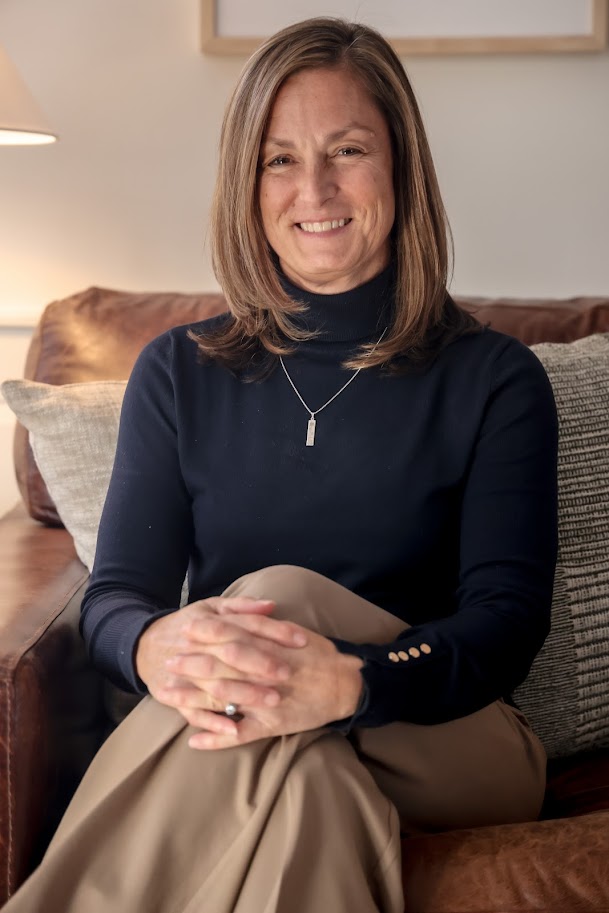
Nancy Thompson has been a Registered Nurse for more than thirty years. She's a Board-Certified Nurse Coach, a Functional Medicine Practitioner, a Reiki Master and a Power Yoga Instructor. She is five years sober.

None of that stopped her from pouring the second glass, and she says so on purpose. The training lets her explain what hormones and cortisol are doing at 3 a.m. The rest means she has been the woman lying awake at that hour.

She has come through getting sober, a serious health crisis, raising her two kids and losing her mom. She lives in Kittery, Maine. Once a month, on a Friday night, she runs Sober Warriors, because those minutes after class are what she needed when she got sober and didn't have.

Through Nancy Thompson Coaching and Holistic Wellness, she helps women find their way back to themselves. She starts with the body, because that's where the relief has to come from first.

A sleep-first plan for women who reach for wine every evening:
calmer nights and rested mornings, without another 30-day challenge

By evening the body is still braced from carrying everyone's day, and a glass of wine is the one thing that tells it the day is over. In Peace Beyond the Glass, nurse coach Nancy Thompson shows you how to give your body that relief another way, starting with a steady bedtime, so the evenings settle and you wake up feeling like yourself.

Buy the book — $20
30-day refund · Ebook only · Instant download